

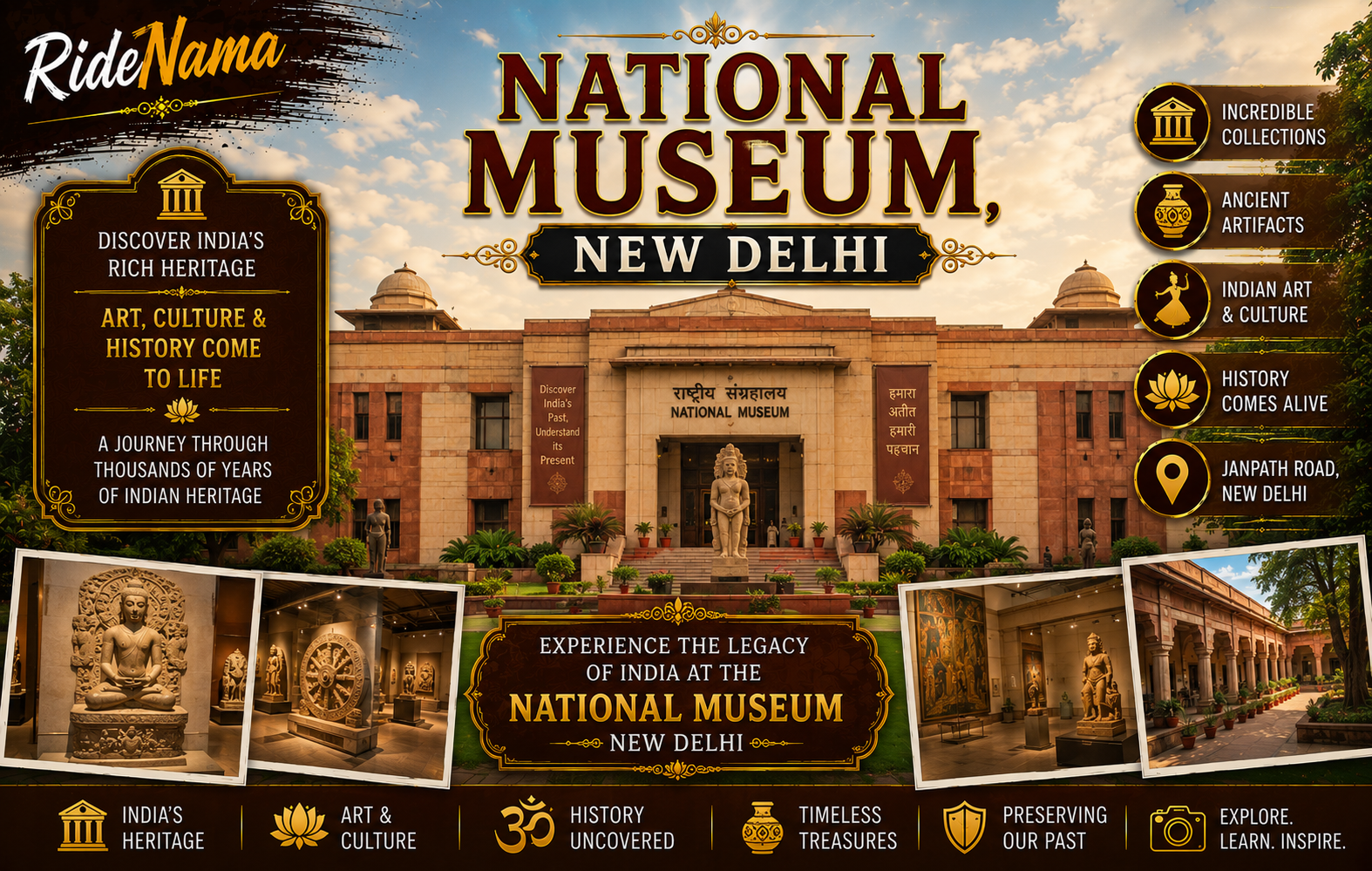

Delhi ke heart mein Janpath par located National Museum, New Delhi, sirf ek museum nahi hai, balki India ki hazaaron saal purani civilization, art, religion, culture, wars, kings, literature aur daily life ki ek giant time machine hai.
Agar aap is museum ke andar enter karte hain, to aisa lagta hai jaise Delhi ki modern roads se nikal kar aap dheere-dheere Harappan Civilization, Maurya Empire, Gupta Period, Buddhist India, Medieval India aur Mughal era mein pahunch rahe hain.
Museum ke paas approximately 2,00,000 objects ka collection hai, jo Indian aur foreign heritage ko represent karta hai aur 5,000 se zyada saalon ka historical timeline cover karta hai.
🏛️ National Museum Ki History
National Museum ki kahani 1946 se shuru hoti hai, jab Maurice Gwyer Committee ne Delhi mein National Museum establish karne ka blueprint prepare kiya.
Iske baad Indian art ki ek important exhibition London ke Burlington House mein organise hui. Exhibition mein India ke alag-alag museums se historical artefacts rakhe gaye the.
1947–48 ki exhibition ke baad decide hua ki in objects ko India wapas le jaane se pehle Delhi mein bhi display kiya jaye.
1949 mein ye exhibition Rashtrapati Bhavan mein lagayi gayi aur public response itna impressive tha ki isi collection ko National Museum ke foundation ke roop mein develop karne ka decision liya gaya.
Finally, 15 August 1949 ko National Museum ka inauguration Rashtrapati Bhavan mein hua.
Baad mein permanent museum building ke liye foundation stone 12 May 1955 ko Jawaharlal Nehru ne rakha.
Museum building ka first phase 18 December 1960 ko inaugurate hua, jabki second phase 1989 mein complete hua.
Aaj museum Ministry of Culture, Government of India ke administrative control mein hai.
🏺 Museum Ke Andar Kya-Kya Hai?
National Museum mein different galleries aur collections hain. Yahan sirf statues nahi hain, balki coins, weapons, jewellery, paintings, manuscripts, archaeological discoveries, textiles, sculptures aur everyday-life objects tak dekhne ko milte hain.
Officially major collections mein:
- Prehistoric Archaeology
- Archaeology
- Anthropology
- Arms & Armour
- Decorative Arts
- Manuscripts
- Numismatics & Epigraphy
- Paintings
- Jewellery
- Central Asian Antiquities
- Pre-Columbian & Western Art
shamil hain.
🧱 1. Prehistoric & Harappan Collection
Museum ka sabse fascinating section un logon ke liye hai jo India ki ancient civilization ko samajhna chahte hain.
Yahan Indus Valley / Harappan Civilization se related objects milte hain.
Imagine kijiye…
Aaj se hazaaron saal pehle log cities mein rehte the, drainage systems use karte the, jewellery banate the, pottery create karte the aur trade karte the.
Museum mein Harappan period se related:
- pottery
- seals
- beads
- toys
- tools
- ornaments
- sculptures
- household objects
jaise artefacts dekhne ko milte hain.
In objects se pata chalta hai ki ancient Indian civilization sirf villages tak limited nahi thi, balki highly organised urban settlements bhi exist karti thi.
🐂 2. Famous Harappan Seals
Harappan seals National Museum ke most interesting objects mein se hain.
Chhote se stone seal par carved animal ya mysterious symbols dekhkar ek question naturally mind mein aata hai—
“Aakhir in symbols ka exact meaning kya tha?”
Harappan script abhi bhi completely decipher nahi hui hai.
Isi wajah se ye chhoti si seals ancient India ke biggest historical mysteries mein se ek ko represent karti hain.
🗿 3. Sculptures Gallery
Museum mein different historical periods ki sculptures hain.
Yahan aapko:
- Buddhist sculptures
- Jain sculptures
- Hindu sculptures
- Bodhisattva figures
- Vishnu
- Shiva
- Devi figures
- Buddha images
- ancient stone sculptures
jaise examples milte hain.
In sculptures ko dekhkar sirf religious history nahi, balki ancient Indian artists ki stone carving, anatomy, symbolism aur artistic techniques ka bhi idea milta hai.
☸️ 4. Buddhist Art & Gandhara Collection
Buddhist art National Museum ka ek important attraction hai.
Specially Gandhara art Indian subcontinent ke cultural exchange ko samajhne mein help karta hai.
Gandhara sculptures mein Indian Buddhist themes ke saath Greco-Roman artistic influence bhi दिखाई देता है.
Yahan Buddha aur Bodhisattva representations ko dekhkar samajh aata hai ki ancient India mein different cultures ke beech art aur ideas ka exchange kitna deep tha.
🪷 5. Buddhist Relics
Museum mein Buddhist heritage se related important relics aur objects bhi preserved hain.
In objects ka connection Buddhism ke spread aur ancient Buddhist traditions se hai.
Ye section especially un visitors ke liye interesting hai jo Buddha, Buddhism aur ancient Indian philosophy ko samajhna chahte hain.
🪙 6. Coins – India Ki Economy Ki Kahani
National Museum ka Numismatics Collection bhi extremely interesting hai.
Coins sirf paisa nahi hote.
Ek ancient coin se pata chal sakta hai:
Kaun ruler tha?
Kis period mein rule karta tha?
Uski political power kitni thi?
Kaunsi language ya script use hoti thi?
Kaunse religious symbols important the?
Museum mein different periods aur rulers ke coins preserved hain.
Gold, silver aur copper coins ancient Indian economy aur political history ko samajhne ke important sources hain.
✍️ 7. Inscriptions & Epigraphy
Ancient India ke rulers apne messages stone, metal plates aur other surfaces par record karte the.
Inscriptions historians ke liye extremely important hain kyunki ye political, religious aur social history ko samajhne mein evidence provide karte hain.
National Museum ke Numismatics and Epigraphy collection mein aise historical records bhi important place rakhte hain.
📜 8. Manuscripts Gallery
Agar aapko ancient books aur handwritten texts interesting lagte hain, to manuscript section definitely special hai.
Yahan different traditions se related:
- religious manuscripts
- illustrated manuscripts
- handwritten texts
- ancient literary works
- calligraphy
- decorated pages
dekhne ko mil sakte hain.
Purane manuscripts sirf information nahi dete; unke pages, scripts, illustrations aur materials bhi apne aap mein historical evidence hote hain.
💎 9. Jewellery Gallery – Alamkara
National Museum ki jewellery gallery ka naam “Alamkara – The Beauty of Ornament” hai.
Ye collection Indian jewellery ki long journey ko show karta hai.
Yahan Harappa aur Mohenjodaro period ke beads se lekar later royal jewellery tak ka development dekha ja sakta hai.
Official museum information ke according, Alamkara gallery mein 250 se zyada jewellery items display kiye gaye hain.
Is collection mein:
- beads
- necklaces
- earrings
- ornaments
- royal jewellery
- religious jewellery
- precious stones
jaise objects Indian craftsmanship ki story batate hain.
👑 10. Mughal & Royal Heritage
Medieval aur Mughal period ki art bhi museum ka important attraction hai.
Yahan royal culture se connected:
- paintings
- weapons
- jewellery
- decorative objects
- manuscripts
- coins
jaise artefacts historical India ki royal lifestyle ko represent karte hain.
In objects ko dekhkar samajh aata hai ki kings aur royal families ke liye art aur craftsmanship kitni important thi.
⚔️ 11. Arms & Armour Gallery
History sirf temples aur paintings ki kahani nahi hoti.
India ki history mein wars aur kingdoms ka bhi huge role raha hai.
National Museum mein Arms & Armour collection mein different periods ke weapons aur protective equipment preserve kiye gaye hain.
Yahan visitors ko historical:
- swords
- shields
- daggers
- armour
- bows
- firearms
- royal weapons
jaise objects dekhne ko mil sakte hain.
Har weapon apne time ki technology aur warfare strategy ke baare mein kuch batata hai.
🎨 12. Indian Paintings
Museum mein Indian painting traditions ka bhi extensive representation hai.
Different schools aur periods ki paintings ke through India ke royal courts, religion, mythology, festivals, nature aur daily life ko dekha ja sakta hai.
Especially miniature paintings mein extremely fine details dekhne ko milti hain.
Ek chhoti painting ko close se dekho to usmein dozens of characters, costumes, buildings, animals aur landscapes tak carefully painted mil sakte hain.
🏺 13. Decorative Arts
Decorative Arts section mein everyday aur luxury objects ke through Indian craftsmanship ko showcase kiya gaya hai.
Ismein:
- metal objects
- ceramics
- decorative items
- textiles
- ivory work
- woodwork
- glass objects
jaise artistic objects ke examples milte hain.
Yahan ek interesting cheez ye samajh aati hai ki ancient aur medieval India mein useful object ko bhi beautiful artwork mein transform kiya jaata tha.
🧑🤝🧑 14. Anthropology Collection
Anthropology collection India ki diverse communities aur cultures ko understand karne mein help karta hai.
Is section ke through:
- tribal traditions
- costumes
- ornaments
- tools
- cultural objects
- social practices
jaise aspects ko explore kiya ja sakta hai.
Ye collection batata hai ki India ki identity sirf ek civilization ki nahi, balki countless communities aur traditions ke combination se bani hai.
🌏 15. Central Asian Antiquities
National Museum mein Central Asian Antiquities ka bhi important collection hai.
Is section se India aur Central Asia ke historical cultural connections samajhne ka opportunity milta hai.
Trade routes, Buddhism, art aur cultural exchange ne India ko Central Asian regions se connect kiya tha.
Is collection mein manuscripts, paintings aur archaeological objects jaise artefacts historical connections ko represent karte hain.
🌎 16. Pre-Columbian & Western Art
National Museum ka collection sirf India tak limited nahi hai.
Museum mein Pre-Columbian and Western Art bhi collection ka part hai.
Iska matlab hai ki visitors ko Indian heritage ke saath kuch foreign artistic traditions ko bhi explore karne ka chance milta hai.
🪔 17. Lakshmi & Other Important Objects
Museum regularly important objects ko highlight karta hai.
For example, museum ke official website par Lakshmi ko Object of the Month ke roop mein feature kiya gaya hai.
Lakshmi ko India mein prosperity aur wealth ki goddess ke roop mein worship kiya gaya hai aur unki representation Hindu, Buddhist aur Jain traditions mein bhi milti hai.
🛕 18. Temple Chariot & Other Large Objects
Museum ke collection mein sirf chhote artefacts nahi hain.
“Collection Beyond Galleries” mein Temple Chariot aur Rock Edict jaise objects bhi listed hain.
Yani museum ki story galleries ke andar hi khatam nahi hoti; kuch large historical objects museum premises ke other spaces mein bhi dekhe ja sakte hain.
⏳ Ek Museum, Hazaaron Saal Ki Journey
National Museum ki sabse interesting baat ye hai ki aap ek hi building mein Indian history ke different chapters ko connect kar sakte hain.
Aapki journey kuch is tarah feel ho sakti hai:
Prehistoric India → Harappan Civilization → Mauryan Period → Buddhist Art → Gupta Period → Medieval Kingdoms → Mughal Era → Regional Kingdoms → Colonial/Modern Period
Har gallery ek alag chapter hai.
Aur har object ek chhoti si story.
😲 National Museum Itna Special Kyun Hai?
Delhi mein historical monuments bahut hain, lekin National Museum un monuments ke peeche chhupi civilization ko samajhne ka ek different experience deta hai.
Aapne India ke ancient temples dekhe hain?
Museum mein unse related sculptures aur art dekh sakte hain.
Aapne ancient kings ke baare mein padha hai?
Museum mein unke period ke coins, weapons aur artworks dekh sakte hain.
Aapne Harappan Civilization ke baare mein school books mein padha hai?
Yahan us civilization ke actual archaeological objects dekhne ka experience milta hai.
Isi wajah se National Museum ek history book nahi, balki history ka physical archive hai.
📍 National Museum Kahan Hai?
National Museum Janpath Road, New Delhi mein located hai.
Official museum information ke according listed visiting hours 10:00 AM to 5:00 PM hain. Visit se pehle current timings aur ticket information official website par check karna best rahega.
🏍️ RideNama Ke Liye Final Thought
Agar aap Delhi se ek historical ride plan kar rahe hain, to National Museum ko sirf “museum visit” mat samajhna.
Isse ek time-travel journey ki tarah dekhiye.
Bike se modern Delhi ki roads par ride karke jab aap National Museum ke andar enter karenge, to bahar ki traffic aur buildings ke beech se suddenly aap thousands of years purani India mein pahunch jaoge.
Ek Harappan seal dekho…
Ek ancient coin dekho…
Buddha ki sculpture dekho…
Mughal painting dekho…
Purani jewellery aur weapons dekho…
Aur phir ek question zaroor aayega—
“Jis India ko hum aaj jaante hain, woh actually bana kaise?”
Shayad National Museum ka sabse bada treasure koi ek gold object ya royal weapon nahi hai.
Sabse bada treasure hai — India ki continuous story.
Aur us story ko samajhne ke liye National Museum, Delhi ek aisi jagah hai jahan history sirf padhi nahi jaati…
History ko aankhon ke saamne dekha jaata hai.